
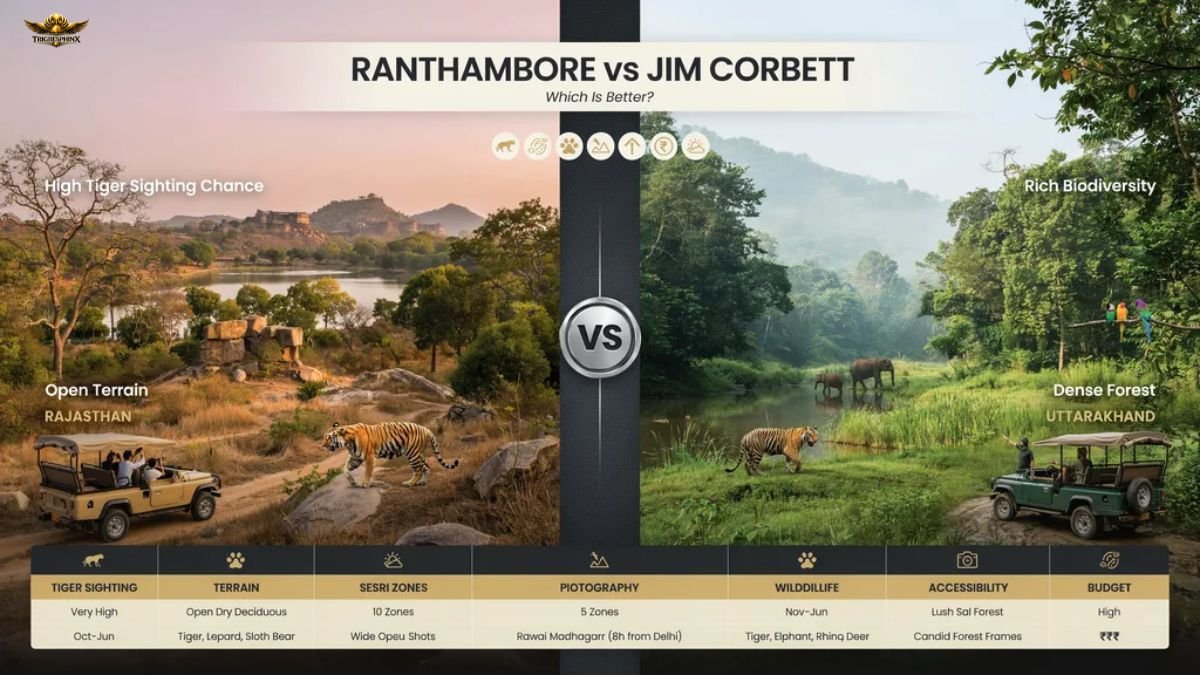
Ranthambore vs Jim Corbett at a Glance
Choosing between Ranthambore National Park and Jim Corbett National Park is one of the most common dilemmas for wildlife lovers planning a tiger safari in India. Both parks are iconic, both offer a real shot at spotting the elusive Bengal tiger, and both attract thousands of nature tourists every year. But they differ sharply in landscape, tiger density, safari experience, and overall travel convenience. This guide breaks down every angle — from tiger sighting probability and safari zones to cost, accessibility, and best travel season — so you can decide which park matches your travel style.
Quick Comparison: Ranthambore vs Jim Corbett
| Feature | Ranthambore National Park | Jim Corbett National Park |
| Location | Rajasthan | Uttarakhand |
| Terrain | Dry deciduous forest, lakes, ruins | Riverine forest, hills, grasslands |
| Tiger Sighting Chance | High (open terrain) | Moderate (dense cover) |
| Best Season | October–June | November–June |
| Nearest Airport | Jaipur | Pantnagar / Dehradun |
| Ideal For | Photographers, first-timers | Nature lovers, families |
| Safari Zones | 10 zones | 5 zones (Dhikala, Bijrani, etc.) |
Ranthambore National Park Overview
Location and Landscape
Located in southeastern Rajasthan, Ranthambore blends dry deciduous forest with rocky outcrops, ancient banyan trees, and shimmering lakes like Padam Talao. The semi-open terrain is one of its biggest draws for wildlife spotting.
Wildlife and Biodiversity
Along with its famous tigers, Ranthambore hosts leopards, sloth bears, marsh crocodiles, and over 300 bird species, making it a strong contender for biodiversity in Rajasthan.
Why Visit Ranthambore?
The combination of open grasslands, a historic fort, and high tiger visibility makes it ideal for wildlife photography and first-time safari-goers who want reliable sightings.
Jim Corbett National Park Overview
Location and Landscape
Jim Corbett National Park is India’s oldest national park, located in the Kumaon foothills of Uttarakhand.Its terrain is far more varied — riverbeds, sal forests, marshy grasslands, and hills — giving it a lush, dense character.
Wildlife and Biodiversity
Corbett is home to elephants, leopards, over 600 bird species, and one of India’s healthiest tiger populations, thanks to its rich prey base and river systems like the Ramganga.
Why Visit Jim Corbett?
Its scenic diversity and forest density appeal to travelers who value immersive nature experiences over guaranteed sightings — the thrill here is the jungle itself, not just the tiger.
Tiger Sighting Chances: Ranthambore vs Jim Corbett
Tiger Population
Corbett has a higher overall tiger count due to its larger area, but Ranthambore has a higher sighting-to-safari ratio.
Forest Visibility
Ranthambore’s open, dry terrain offers better visibility; Corbett’s dense sal forests and tall grass can conceal tigers even when they’re close by.
Best Safari Zones for Tiger Sightings
In Ranthambore, Zones 1, 2, 3, 4, and 6 are known tiger hotspots. In Corbett, Dhikala and Bijrani zones consistently report the most sightings.
Safari Success Rate
Most seasoned safari guides rate Ranthambore’s tiger sighting probability noticeably higher for short 2–3 day trips, while Corbett rewards longer, more patient visits.
Wildlife Diversity Beyond Tigers
Animals Found in Ranthambore
Leopards, striped hyenas, sloth bears, chital, sambar deer, and marsh crocodiles.
Animals Found in Jim Corbett
Asian elephants, leopards, otters, gharials, and a wider range of deer species due to varied habitats.
Birdwatching Opportunities
Corbett edges ahead for birdwatching in India, with over 600 recorded species compared to Ranthambore’s 300+, owing to its riverine ecosystems.
Safari Experience Compared
Safari Types
Both parks offer jeep and canter safaris; Corbett additionally allows a unique overnight stay experience inside the Dhikala core zone.
Safari Zones
Ranthambore’s 10 zones spread tourist traffic more evenly, while Corbett’s fewer zones mean higher demand for Dhikala permits.
Safari Booking Process
Both require advance online booking through official forest department portals, especially during peak season when slots sell out weeks ahead.
Best Time for a Safari
Early morning and late afternoon safaris yield the best results in both parks, as tigers are most active during cooler hours.
Best Time to Visit
Best Season for Tiger Sightings
April to June is peak tiger-sighting season in both parks, when water sources shrink and animals gather near remaining lakes and rivers.
Weather Comparison
Ranthambore gets noticeably hotter in summer (up to 45°C), while Corbett’s hill-adjacent climate stays comparatively milder.
Peak vs Off-Season Travel
Both parks close during monsoon (July–September) for core zones, though Corbett’s buffer zones often remain accessible year-round.
Landscape and Natural Beauty
Ranthambore’s Forests and Lakes
Dry forest, historic ruins, and picturesque lakes create a dramatic, almost cinematic backdrop for safaris.
Jim Corbett’s Rivers, Hills, and Dense Forests
Rolling hills, river valleys, and dense sal forest give Corbett a greener, more layered visual character.
Which Park Is Better for Nature Lovers?
Corbett generally wins for overall scenic diversity; Ranthambore wins for dramatic, photogenic tiger encounters.
Accessibility and How to Reach
How to Reach Ranthambore
Nearest airport: Jaipur (~180 km); well connected by train to Sawai Madhopur station, right at the park’s doorstep.
How to Reach Jim Corbett
Nearest airports: Pantnagar and Dehradun; nearest railhead is Ramnagar, followed by a short road journey.
Travel Convenience Compared
Ranthambore is slightly easier to reach from major cities like Delhi and Jaipur, giving it an edge for short weekend trips.
Accommodation Options
Luxury Resorts
Both parks offer high-end options — Ranthambore has properties like Aman-i-Khás and Sujan Sher Bagh; Corbett offers riverside luxury resorts near Dhikala and Bijrani.
Mid-Range Hotels
Plenty of comfortable 3–4 star options exist near both park entrances, typically priced similarly.
Budget-Friendly Stays
Corbett has a slight edge with more budget guesthouses due to its larger tourist infrastructure spread across multiple gates.
Cost Comparison
| Expense Category | Ranthambore | Jim Corbett |
| Safari (per person) | ₹1,500–3,000 | ₹1,500–3,500 |
| Mid-range stay (per night) | ₹4,000–8,000 | ₹3,500–7,500 |
| Luxury stay (per night) | ₹15,000+ | ₹12,000+ |
| Average 3-day trip budget | ₹20,000–35,000 | ₹18,000–32,000 |
Safari Costs
Prices are comparable, though Corbett’s Dhikala overnight stay adds extra cost.
Accommodation Costs
Ranthambore’s luxury segment tends to be pricier due to boutique heritage properties.
Food and Transportation Costs
Both destinations have similar food costs; transportation is marginally cheaper in Ranthambore due to shorter airport distance.
Overall Trip Budget
For a 3-day trip, expect a similar overall budget for either park, with Ranthambore slightly cheaper for quick getaways.
Nearby Attractions
Places to Visit Near Ranthambore
Ranthambore Fort, Trinetra Ganesh Temple, and Kaila Devi Temple.
Places to Visit Near Jim Corbett
Corbett Waterfall, Garjiya Devi Temple, and the hill town of Nainital, about 3 hours away.
Historical and Cultural Highlights
Ranthambore Fort
A UNESCO World Heritage Site overlooking the park, blending history with wildlife tourism in a way few parks can match.
Garjiya Devi Temple
A riverside temple near Corbett, popular with pilgrims and travelers alike.
Local Culture and Heritage
Rajasthan’s vibrant Rajput heritage surrounds Ranthambore, while Corbett is steeped in Kumaoni hill culture and Jim Corbett’s own conservation legacy.
Photography Experience
Wildlife Photography
Ranthambore’s open terrain and dramatic light make it a favorite among wildlife photographers.
Landscape Photography
Corbett’s forests, rivers, and misty hills offer richer landscape variety for photography.
Best Photography Season
Winter mornings (December–February) for soft light, and April–June for high tiger activity.
Which Park Is Best for Different Travelers?
Families
Ranthambore’s shorter travel time and higher sighting odds make it more family-friendly.
Couples
Corbett’s scenic resorts and riverside settings suit romantic getaways.
Solo Travelers
Both work well, though Ranthambore’s simpler logistics suit solo, time-limited trips.
Wildlife Photographers
Ranthambore is generally preferred for tiger shots; Corbett for broader nature and bird photography.
Pros and Cons of Ranthambore
Pros: High tiger sighting rate, easy access from Delhi/Jaipur, historic fort, well-organized zones. Cons: Extremely hot summers, crowded during peak season, less scenic diversity than Corbett.
Pros and Cons of Jim Corbett
Pros: Richer biodiversity, better birdwatching, scenic hill-forest landscape, milder climate. Cons: Lower tiger visibility due to dense cover, longer travel time from major cities, higher demand for Dhikala permits.
Ranthambore vs Jim Corbett: Side-by-Side Comparison Table
| Criteria | Ranthambore | Jim Corbett |
| Tiger sighting chance | Higher | Moderate |
| Landscape variety | Moderate | Higher |
| Birdwatching | Good | Excellent |
| Accessibility from Delhi | Easier | Longer |
| Family-friendliness | High | High |
| Photography | Best for tigers | Best for landscapes |
| Budget | Slightly cheaper | Comparable |
Final Verdict: Which National Park Should You Choose?
If your priority is a high chance of spotting a tiger in a short trip with easy access from Delhi or Jaipur, Ranthambore is the smarter pick. If you want a richer, greener wildlife experience with strong birdwatching and varied terrain, and don’t mind a slightly lower tiger-sighting probability, Jim Corbett delivers a more well-rounded jungle experience. Many seasoned travelers eventually visit both, since each park offers something genuinely different rather than a better-or-worse comparison.
FAQs
Which national park is better for tiger sightings?
Ranthambore offers a higher chance of tiger sightings due to its open terrain and better visibility.
What is the best time to visit Ranthambore and Jim Corbett?
The best time to visit both parks is from October to June, with April to June being ideal for spotting tigers.
Which park is more budget-friendly?
Both parks have similar travel costs, but Ranthambore is often slightly more affordable for short trips.
Which park is better for wildlife photography?
Ranthambore is best for tiger photography, while Jim Corbett is ideal for landscapes and birdwatching.
Can I visit Ranthambore and Jim Corbett on the same trip?
Yes. Many travelers combine both parks to enjoy different safari experiences and diverse wildlife.
Future Updates: This comparison will be updated periodically to reflect changes in safari zone allocations, forest department booking rules, seasonal closures, and updated tiger census data for both Ranthambore and Jim Corbett, so readers always have the most current information for trip planning.